
The Iqama is the residence permit issued to every expatriate living and working in Saudi Arabia. Without it, you cannot open a bank account, rent a home, register a SIM card, access healthcare, or use any government service. This guide covers issuance, renewal, fees, status checks, employer transfers, and the digital Iqama.
What Is an Iqama?
The Iqama (Arabic for “residence”) is issued by the Saudi Ministry of Interior (MOI) through the General Directorate of Passports (Jawazat). It serves as your primary ID inside Saudi Arabia and is required for virtually every official transaction.
Every foreign national intending to reside and work in the Kingdom must have one. Your employer (sponsor) is legally responsible for initiating and paying for the issuance process.
Types of Iqama
- Work Iqama: For employees of Saudi-based companies or sponsors. The most common type.
- Family/Dependent Iqama: For the spouse and children of a foreign worker.
- Premium Residency (formerly SP-Iqama): A long-term residency that does not require a Saudi sponsor. Available as a permanent option (SAR 800,000 one-time fee) or a renewable option (SAR 100,000/year). Category-based residency is also available for special talent, investors, entrepreneurs, and real estate owners at SAR 4,000 for up to five years.
The 5-Year Physical Resident ID Card
Saudi Arabia has rolled out a 5-year physical Resident ID card, replacing the older annual card. The card is delivered via Wasil postal service to your registered National Address.
Your residency status must still be renewed annually through Absher or Muqeem. The physical card and the digital renewal are decoupled — you no longer need a new card printed each year.
How to Get an Iqama After Arriving in Saudi Arabia
Your employer handles the entire Iqama issuance process and bears all costs. Here is what to expect after you arrive on a work visa.
Step-by-Step Issuance Process
- Medical screening: Complete a medical examination at an approved clinic (blood tests, chest X-ray, health assessments).
- Employer submits the application: Your employer files the Iqama request through the Muqeem portal, uploading your visa documents, medical results, and employment details.
- Biometric registration: Visit a designated Jawazat or biometric center to provide fingerprints and a photograph.
- Fee payment: The employer pays all fees (Iqama issuance, work permit, insurance) digitally via SADAD.
- Iqama issued: Once verified, your Iqama is officially active. The digital version is available in Absher and Tawakkalna. The physical card arrives via Wasil.
According to Qiwa (Ministry of Human Resources), the employer must complete this process within 90 days of your arrival. If they fail to do so, you gain the right to transfer to a new employer without your current sponsor’s approval.
Understanding Your Iqama Number
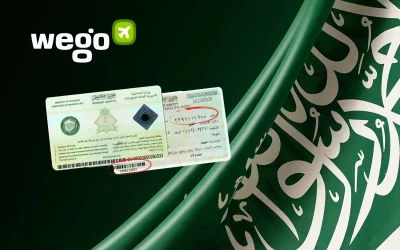
Your Iqama number is a unique 10-digit identification number assigned by Jawazat. For expatriate residents, the number always starts with “2” (Saudi citizen IDs start with “1”).
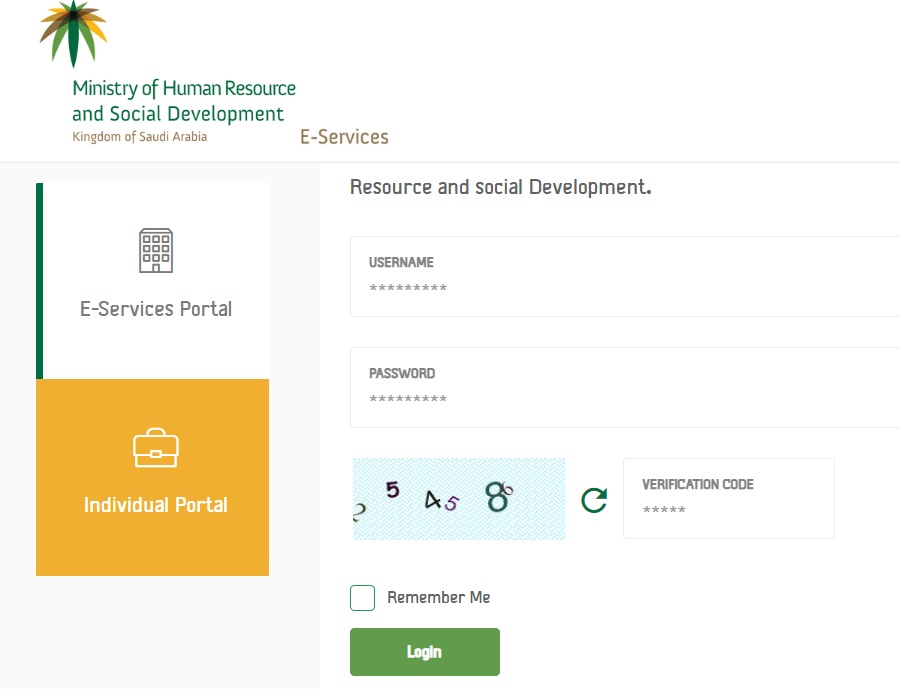
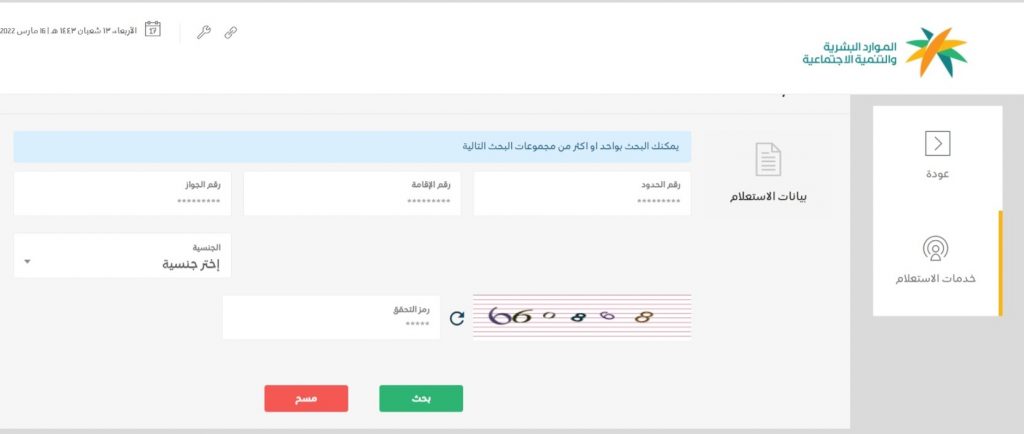
You’ll find this number on the front of your physical Iqama card. If you haven’t received your card yet, you can check your number through the MHRSD portal using your border number. For a complete breakdown, see our detailed Iqama number guide.
Where to Find Your Iqama Number
- Physical card: Printed on the front of the card
- Absher app: Log in and navigate to “My Services” then “Iqama Information”
- Tawakkalna app: Your digital ID displays the number
- Through your employer: Available on the Muqeem portal
This number is used for banking, healthcare, mobile registration, traffic fines, government services, and insurance verification.
How to Check Your Iqama Status and Validity
There are several official ways to check whether your Iqama is active, expired, or due for renewal. For a full walkthrough, see our dedicated Iqama status check guide.
Via Absher
- Log in to Absher with your credentials and OTP verification.
- Tap your name or profile photo, then select “My Resident ID.”
- View your Iqama details, including issue date, version number, and expiry date.
Absher sends automated reminders at 90 days, 30 days, and 7 days before your Iqama expires via push notification and SMS.
Via Muqeem Portal
- Log in to Muqeem (this is an employer-facing portal, so ask your HR department if needed).
- Select “Visa Validity” and enter the Iqama number.
- Confirm with date of birth or passport number to view the status.
Via MOI Portal
Visit the Ministry of Interior website, navigate to e-services, and use the public inquiry tool with your Iqama number to check expiry details.
Iqama Renewal: Fees, Process, and Deadlines
Iqama renewal is one of the most important administrative tasks for any expat in Saudi Arabia. Missing the deadline can trigger fines and service suspensions. For the complete step-by-step process, see our Iqama renewal guide.
Renewal Fees
| Category | Annual Fee (SAR) | Notes |
|---|---|---|
| Commercial/institutional workers | SAR 650 | Paid by employer |
| Domestic workers | SAR 600 | Paid by sponsor |
| Dependents (per person) | SAR 4,800 | SAR 400/month per dependent |
| Work permit levy (commercial) | SAR 8,400 – SAR 9,600 | SAR 700/month if Saudization targets are met; SAR 800/month if expats outnumber Saudis. Paid by employer. Companies with a valid Industrial License are permanently exempt (December 2025 Cabinet decision). Small businesses (≤9 employees) may exempt 2–4 foreign workers. |
Renewal is available in flexible durations: 3, 6, 9, or 12 months. Dependent fees scale accordingly (SAR 1,200 for 3 months, SAR 2,400 for 6 months, SAR 3,600 for 9 months).
Prerequisites for Renewal
Before the system allows renewal, several conditions must be met:
- Valid CCHI-compliant health insurance, auto-verified by Absher from the Council of Health Insurance
- Passport validity of at least 6 months remaining
- No unpaid traffic fines (even a small parking fine can block the renewal)
- GOSI registration for the worker
- Nitaqat compliance (companies in the red zone are blocked)
- No unresolved Huroob (absconding) reports against the worker
When to Renew
For domestic workers, renewal is allowed when the Iqama has less than 14 months of validity remaining. For commercial workers, renewal is typically handled by the employer when 6 months or less of validity remain.
Start the process at least 30 days before expiry. Absher sends automated reminders at 90, 30, and 7 days.
How to Renew
For employees, the employer renews through Absher Business or Muqeem. Batch renewals are possible through Muqeem.
For family members and domestic workers, the sponsor renews through their personal Absher Individuals account under “Expatriate Services” then “Renew Iqama.” Payment is made via SADAD.
Late Renewal Penalties
According to the Ministry of Interior, there is a 3-day grace period after the Iqama expiry date. After that:
- First offense: SAR 500 fine plus SAR 100 for each additional day overdue, plus service suspension
- Second offense: SAR 1,000 fine plus service suspension
- Third offense: SAR 2,000+ fine with possible deportation and re-entry ban
An expired Iqama can also lead to frozen bank accounts, suspended SIM cards, blocked rental contracts, and restricted access to Absher and other government platforms. You also risk detention during routine identity checks.
Digital Iqama: Absher and Tawakkalna
The Digital Iqama is the official electronic version of your Resident ID, accessible through the Absher Individuals app and the Tawakkalna app.
It is legally accepted as proof of identity throughout Saudi Arabia, including at security checkpoints. You can also download the digital Iqama for your dependents through the same apps.
Iqama Red-Green Status and Huroob
You may hear expats refer to their Iqama being “red” or “green.” This refers to the Nitaqat (Saudization) compliance level of your employer’s company, not your personal status.
What the Colors Mean
Green means your employer meets Saudization quotas. This allows smoother visa processes, easier sponsorship transfers, and the ability to change professions or renew early.
Red means your employer has low Saudization compliance. The company is restricted from issuing new visas, renewing Iqamas, approving transfers, or processing profession changes. You can check your employer’s Nitaqat status through the Qiwa dashboard or by logging into Absher.
Huroob (Absconding Reports)
Huroob (Arabic for “escape”) is a report filed by an employer when a worker is absent without permission for 15+ consecutive days or 30+ days during the contract year. The employer files it through the Qiwa platform.
The consequences are severe: a Huroob report immediately invalidates your Iqama, making you an illegal resident. This carries the risk of arrest, detention, deportation, and a re-entry ban.
How to Resolve a Huroob Report
- Workers reported as absent have a 60-day correction window from the date the report is filed. During this period, enforcement is paused and the worker can either transfer sponsorship to a new employer through Qiwa or apply for a final exit visa.
- Within the first 15 days, your employer can voluntarily cancel the report through Qiwa. The system updates within hours to 1–3 business days.
- If no action is taken within 60 days, the status converts to a formal absconding record, leading to Iqama cancellation and possible arrest and deportation.
- If your employer filed a false Huroob report, you can file a complaint with the Ministry of Labor or labor court. Employers filing false reports face fines up to SAR 20,000.
How to Check Your Health Insurance via Iqama
Health insurance is a legal requirement for all expatriate residents in Saudi Arabia. Without valid coverage, your Iqama cannot be issued or renewed.
Steps to Check Insurance Status
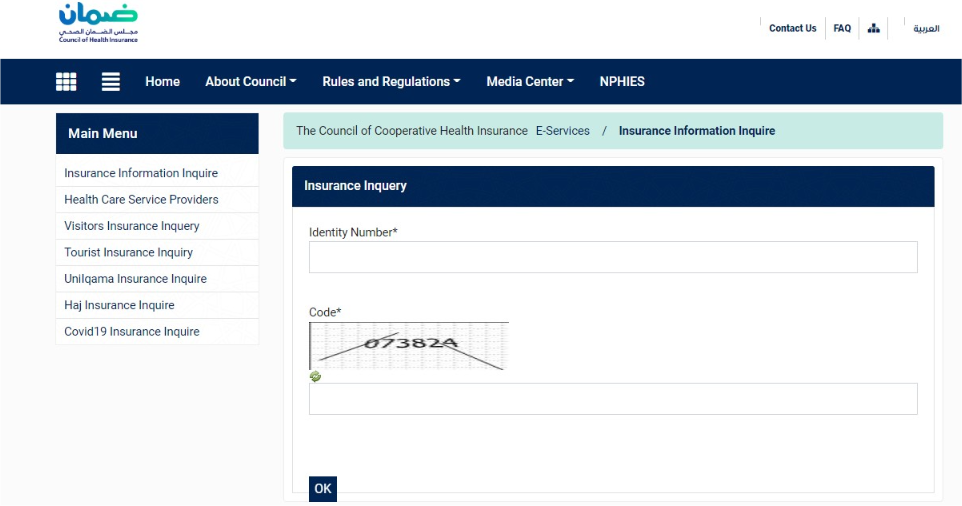
- Visit the Council of Health Insurance (CHI) inquiry page.
- Enter your 10-digit Iqama number.
- Complete the security CAPTCHA and press “Ok.”
- The system displays your insurance class, policy number, deductible percentage, and expiry date.
You can also check via the Daman CHI mobile app (available on Android and iOS) or call the CHI helpline at 920001177.
Changing Your Profession on the Iqama
If your actual job role does not match the profession listed on your Iqama, it can be updated through the Qiwa platform. Saudi authorities actively enforce that the registered profession matches the actual role being performed.
Your employer submits the profession change request through Qiwa, and you approve it via Qiwa Individuals within 10 days. The fee is SAR 1,000, paid by the employer.
Key conditions: a valid Iqama, no unpaid traffic violations, no Huroob report, the worker must be physically present in Saudi Arabia, and the new profession cannot be one restricted exclusively to Saudi nationals. Changing to Engineer or Doctor requires valid registration with the Saudi Council of Engineers (SCE) or the Saudi Commission for Health Specialties, respectively.
Employer Transfer (Labor Mobility)
Under the Labor Reform Initiative (LRI), expatriate workers in Saudi Arabia have greater mobility to transfer between employers. All transfers are processed digitally through Qiwa.
Standard Transfer Process
- The new employer registers a formal job offer and contract on Qiwa.
- You confirm the new contract through Qiwa Individuals.
- The system notifies your current employer, who has 14 days to respond.
- If no valid objection is raised, the transfer proceeds.
Transfer Without Employer Approval
You can transfer to a new employer without your current sponsor’s consent if any of these conditions apply:
- Your employer failed to issue a work permit within 90 days of your arrival
- Your employer has not paid your salary for 3 consecutive months
- Your work permit or Iqama has expired and the employer has not renewed it
After the transfer is complete, the new employer handles the Iqama update and renewal.
Lost or Damaged Iqama: Replacement Process
If your Iqama is lost or damaged, act quickly.
If Stolen
File a police report at the nearest station within 24 hours (your sponsor should accompany you). With a police report, no replacement fee is charged.
If Lost (Not Stolen)
Inform your employer/sponsor immediately. A police report is not required for non-theft loss. Replacement fees apply:
- First time: SAR 1,000
- Second time: SAR 2,000
Your employer submits the replacement request via Absher or visits a Jawazat office. You’ll need to provide fingerprints at Jawazat, and any outstanding traffic violations must be cleared. The new card is typically issued within 1–3 business days.
Travel on an Iqama: Exit/Re-Entry and Final Exit Visas
Your Iqama alone does not allow you to leave and re-enter Saudi Arabia. You need an exit/re-entry visa for temporary travel or a final exit visa to permanently end your residency.
Exit/Re-Entry Visa Fees
| Type | Fee (SAR) | Validity |
|---|---|---|
| Single exit/re-entry | SAR 200 | Up to 2 months |
| Multiple exit/re-entry | SAR 500 | Up to 3 months |
| Multiple (6 months) | SAR 3,000 | 6 months |
| Multiple (1 year) | SAR 5,000 | 1 year |
Your passport must be valid for at least 90 days, your Iqama must cover the visa duration, you must be inside Saudi Arabia when applying, and all traffic fines must be cleared. Exit/re-entry visa fees are non-refundable, even if the visa is canceled before use.
Apply through Absher under “Visa Services.” Extensions for residents outside KSA are charged at double the rate.
Final Exit Visa
The final exit visa permanently ends your residency in Saudi Arabia. It is free of charge. Your passport must have at least 60 days of validity, and all debts and dues must be settled before departure. Once issued, your Iqama is no longer valid.
The previous 3-year re-entry ban for overstayers has been eliminated. Workers who previously overstayed can now re-enter on new work visas.
Looking for flights from Riyadh or flights from Jeddah? Compare prices on Wego before you book.
Adding Dependents to Your Iqama
Expatriate workers can sponsor their family members for residence in Saudi Arabia.
Who Qualifies
- Dependents: Spouse and male children under 18
- Companions: Male children over 18 (up to age 25, only if enrolled in higher education), additional spouses, parents, and domestic workers sponsored by the resident. Iqamas for male dependents above 25 are generally not renewed.
Dependent Fees
The monthly levy is SAR 400 per dependent, totaling SAR 4,800 per year. Newly arrived dependents get a 90-day grace period before the fee kicks in.
Payment can be made in flexible intervals: SAR 1,200 (3 months), SAR 2,400 (6 months), SAR 3,600 (9 months), or SAR 4,800 (12 months) per dependent. Pay through online banking (SNB, Al Ahli, Al Rajhi), Absher, or Jawazat offices.
Need accommodation for your family? Search hotels in Riyadh or hotels in Jeddah on Wego.
Iqama and Driving in Saudi Arabia
Expatriate residents with a valid Iqama can drive in Saudi Arabia, but you must obtain a Saudi driving license. A foreign license is only valid for visitors (up to 1 year from arrival). Once you receive your Iqama, you have 3 months to convert to a Saudi license.
If your license is from one of the approximately 47 approved countries (including the US, UK, EU nations, Australia, Canada, and GCC states), you qualify for direct conversion without a driving test. Others will need to pass a driving test.
Requirements include your original Iqama and passport, a medical examination from an Efada-approved clinic, and four passport-sized photos (4×6 cm). Expat licenses are valid for 5 years and renewable.
Troubleshooting Common Iqama Issues
Running into problems with the online portals? Here are the most common issues and quick fixes.
- “No record found”: Double-check your Iqama number and nationality entry. Try using a different identifier (passport number or border number).
- CAPTCHA failures: Refresh the page and retype carefully. Try a different browser if the issue persists.
- Portal slow or down: Try during off-peak hours (early morning or late evening Saudi time). Switch between Absher, Muqeem (via employer), or the MOI portal.
- Mismatched data: Update your passport details in Absher first under “Update Passport Information,” then retry your query.
- Renewal blocked: Check for unpaid traffic fines, expired insurance, or Nitaqat issues with your employer.
Frequently Asked Questions
How long after arrival should my employer complete the Iqama?
Your employer must issue a work permit and complete the Iqama process within 90 days of your arrival. If they fail to do so, you gain the right to transfer to a new employer without their approval, as per Qiwa regulations.
Can I work on a family (dependent) Iqama?
No. Under Saudi Labour Law (Article 33), non-Saudis may not work without a proper work permit. If you intend to work, you must transfer to an employer who will issue you a work contract and work permit through Qiwa.
Can I travel inside Saudi Arabia using only the Digital Iqama?
The Digital Iqama on Absher and Tawakkalna is officially accepted. However, it is still advisable to carry your physical card when traveling between provinces, as some older checkpoints may still request it.
What happens if my employer has a red Nitaqat status?
If your employer is in the red Nitaqat zone (low Saudization compliance), your Iqama renewal, profession change, and transfer services may be blocked. You should discuss the situation with your employer or explore transferring to a compliant company through Qiwa.
How much does it cost to renew an Iqama for one year?
The Iqama renewal fee is SAR 650/year for commercial workers and SAR 600/year for domestic workers. Employers also pay a work permit levy of SAR 8,400–9,600/year for commercial workers (companies with an Industrial License are exempt). Dependent fees are SAR 4,800/year per person.
Sources
- Absher Platform
- Saudi Ministry of Interior (MOI)
- Qiwa — Work Permits
- Qiwa — Employee Transfer
- Council of Health Insurance (CHI)
- Tawakkalna Services
- Muqeem Portal
- my.gov.sa — Issuing a Residence Permit
- my.gov.sa — Renewal of Iqama
- Ministry of Human Resources and Social Development
- Arab News — Saudi Cabinet Cancels Expat Fees for Industrial Facilities
Disclaimer: Wego strives to ensure all information presented in this article is accurate and up to date at the time of publication. Travel policies, prices, visa requirements, and conditions can change rapidly. We strongly recommend verifying critical details with official sources before making travel decisions. Wego does not accept liability for any inaccuracies, oversights, or changes that may occur after publication.