
Ramadan 2027 in Pakistan: Dates, Iftar Times and Traveller’s Guide

Last updated: Apr 22, 2026

Ramadan 2027 in Pakistan is expected to begin on Monday, 8 February 2027, with the holy month ending around Tuesday, 9 March 2027 and Eid al-Fitr anticipated on Wednesday, 10 March 2027. The final dates rest with Pakistan’s Central Ruet-e-Hilal Committee, which confirms the sighting of the crescent the evening before the first fast.

Pakistan is a Muslim-majority country of over 240 million people, and Ramzan — as it is commonly called locally — shapes daily life in cities like Karachi, Lahore, Islamabad, and Peshawar. This guide covers the essentials — dates, Sehri and Iftar timings, traditions, food, and etiquette — for residents and visitors flying into Jinnah International Airport or Allama Iqbal International Airport. Start planning with flights to Pakistan and hotels in Pakistan on Wego.

When Is Ramadan in Pakistan in 2027?

Astronomers expect the first fast to fall on Monday, 8 February 2027, with the month wrapping up around Tuesday, 9 March 2027. The precise start and end will be confirmed by the Central Ruet-e-Hilal Committee (CRHC) the evening before the first fast, based on eyewitness testimonies from moon-sighting stations across the country. Announcements are broadcast on PTV, private TV channels, and through mosque loudspeakers.

Ramadan 2027 Key Dates

Event Expected Date Notes
First day of Ramadan Monday, 8 February 2027 Subject to moon sighting
Laylat al-Qadr (27th night) Around 5 March 2027 Sought in the last ten odd nights
Last day of Ramadan Tuesday, 9 March 2027 Subject to moon sighting
Eid al-Fitr Wednesday, 10 March 2027 Public holiday in Pakistan (3 days)

Because Ramadan 2027 falls in late winter, fasting hours across Pakistan will run roughly 12 to 13 hours on day one, lengthening slightly as the month progresses into early spring.

Sehri and Iftar Times in Pakistan

Official Ramadan calendars for major cities are published annually by local committees, the Ministry of Religious Affairs, and Islamic organisations. For Ramadan 2027, expect Sehri around 5:00 AM to 5:30 AM and Iftar between 6:10 PM and 6:45 PM, shifting through the month depending on city.

Estimated times below are based on 2026 Pakistan Ramadan calendars for Fiqh Hanafi. Confirm with the official 2027 calendar when released.

City Sehri (Fajr) Start Iftar (Maghrib) Start Approx. Fasting Hours
Karachi ~ 5:25 AM ~ 6:10 PM ~ 12h 45m
Lahore ~ 5:20 AM ~ 5:50 PM ~ 12h 30m
Islamabad ~ 5:20 AM ~ 5:45 PM ~ 12h 25m
Peshawar ~ 5:25 AM ~ 5:50 PM ~ 12h 25m
Quetta ~ 5:40 AM ~ 6:10 PM ~ 12h 30m

These timings will shift slightly in 2027 and change daily through the month. Always confirm with the official calendar for your city before the first fast.

How Ramadan Shapes Daily Life in Pakistan

Ramzan transforms Pakistan’s daily rhythm. Office hours are officially shortened, markets quiet down during the day, and cities pulse with energy after Iftar. Spiritual routines take precedence, and community gatherings become central to the month.

The Daily Rhythm

  • Suhoor (before Fajr): Families rise for a pre-dawn meal of parathas, eggs, yogurt, and chai. TV channels broadcast naats and reminders.
  • Workday (morning to afternoon): Government offices typically run 9:00 AM to 3:00 PM on a five-day week and 9:00 AM to 2:00 PM on a six-day week during Ramadan.
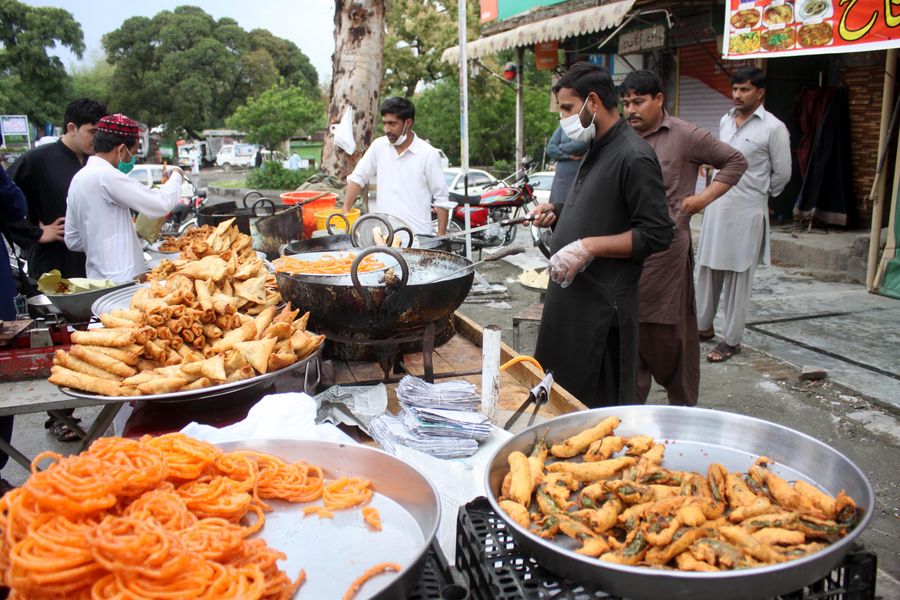
  • Iftar (sunset): The fast breaks with dates, Rooh Afza, and fruit, followed by pakoras, samosas, fruit chaat, and a main meal.
  • Taraweeh (after Isha): Mosques fill for Taraweeh prayers, often running 60 to 90 minutes.
  • Late night: Bazaars, sweet shops, and restaurants stay open past midnight; families visit one another for tea and desserts.

Public Etiquette for Visitors

Pakistan observes Ramadan publicly and legally. Eating, drinking, and smoking in public during fasting hours are restricted under the Ehtram-e-Ramazan Ordinance, so visitors should plan accordingly.

  • Do not eat, drink, or smoke in public during daylight hours. Most restaurants close or serve only behind curtains until Iftar; hotel restaurants typically remain open for non-Muslim guests.
  • Dress modestly — cover shoulders and knees; women should carry a dupatta or scarf, especially near mosques and shrines.
  • Offer greetings like “Ramzan Mubarak” or “Ramadan Kareem” to fasting colleagues and neighbours.
  • Avoid loud music in public areas and near mosques during prayer times.

Tips for Travellers

  • Shop for groceries and essentials in the morning; stores get crowded an hour before Iftar.
  • Many hotels in Karachi, Lahore, and Islamabad offer Iftar and Suhoor-inclusive packages — book in advance.
  • Traffic peaks in the last 30 minutes before Iftar; avoid driving then if possible.
  • Roadside Iftars are open to everyone — a meaningful way to experience Pakistani hospitality.
  • If you’re flying in, major airports like Jinnah International (KHI) and Islamabad International (ISB) have dedicated prayer rooms.

Traditions and Cultural Expressions

Moon Sighting and National Announcements

The Central Ruet-e-Hilal Committee convenes on the 29th of Shaban at its Karachi headquarters, with zonal committees reporting from across the country. Once the crescent is confirmed, the announcement is broadcast on national television, and mosque loudspeakers relay the news to neighbourhoods. Families exchange calls and messages to mark the start of the holy month.

Iftar Food Culture

Pakistani iftar tables are famously generous, drawing from Mughlai, Punjabi, Sindhi, and Pashtun culinary traditions. The meal typically opens with dates and Rooh Afza, followed by fried snacks and a heartier main course.

  • Pakoras: Spiced chickpea-flour fritters with onions, potatoes, or spinach — the iftar staple.
  • Samosas: Triangular pastries filled with spiced potatoes, keema (minced meat), or lentils.
  • Jalebi: Crisp orange spirals soaked in sugar syrup, a beloved sweet pairing.
  • Fruit chaat and dahi baray: Sweet-and-savoury fruit salad and yogurt-drenched lentil dumplings.
  • Haleem and nihari: Slow-cooked stews of meat, lentils, and wheat — weekend iftar favourites.
  • Biryani and pulao: Aromatic rice dishes that often anchor the main course.
  • Rooh Afza: A chilled rose-flavoured sherbet, considered the quintessential iftar drink.

Ramadan Bazaars and Street Food

Come evening, streets in Karachi’s Burns Road, Lahore’s Food Street and Gawalmandi, Islamabad’s Melody Market, and Peshawar’s Namak Mandi transform into open-air food hubs. Pop-up stalls sell samosas, pakoras, jalebi, kebabs, and fresh naan — all timed for Iftar pickup. Sweet shops stock trays of seviyan, barfi, and gulab jamun, staying open well past midnight for Suhoor runs and late-night family gatherings.

Charity and Community

Generosity defines Ramzan in Pakistan. Zakat (obligatory almsgiving) and Fitrana (pre-Eid charity) are collected in mosques and distributed to families in need. Welfare organisations like Edhi Foundation, Saylani Welfare, and JDC serve free daily iftar meals to thousands across major cities. The 27th night — commonly observed as Laylat al-Qadr — sees the largest charitable giving and mosque attendance of the year.

Faith and Worship

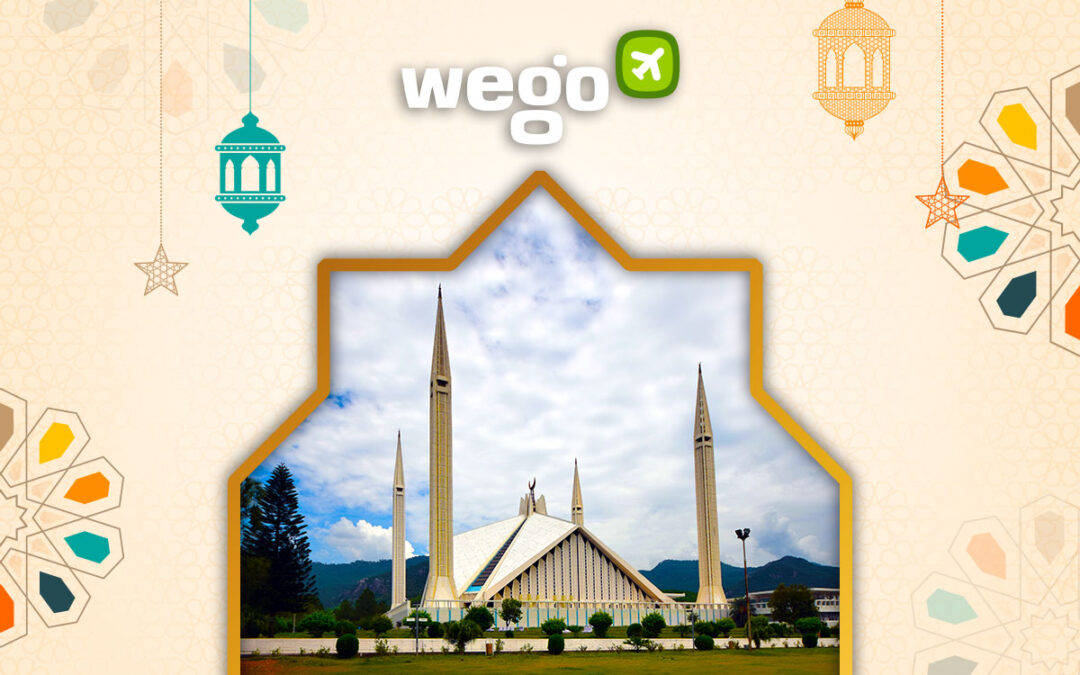
Pakistan’s mosques come alive during Ramzan. The Faisal Mosque in Islamabad — the largest in the country — draws thousands nightly, as do historic landmarks like the Badshahi Mosque in Lahore and Tooba Mosque in Karachi.

Taraweeh prayers are held nightly across every neighbourhood mosque, typically running 8 or 20 raka’at after Isha. Many worshippers aim to complete a full Qur’an recitation over the month — a tradition called khatam-e-Qur’an. In the final ten nights, mosques hold extended Qiyam al-Layl vigils, and thousands of men observe Itikaf — a retreat of seclusion in the mosque for the last ten days of the month.

Preparing for Eid al-Fitr 2027

Eid al-Fitr 2027 is expected to fall on Wednesday, 10 March 2027, and is a declared public holiday in Pakistan, observed over three days. Banks, government offices, schools, and most businesses close for the holiday.

Chand Raat

The night before Eid — Chand Raat, literally “moon night” — is a celebration in itself. Markets stay open until dawn as families shop for clothes, bangles, and sweets. Women and girls gather for mehndi (henna) at home and in open-air bazaars, and streets buzz with impromptu fireworks and music.

Eid Morning

Muslims wake early, wear new clothes, and head to mosques or open-air prayer grounds (Eidgahs) for the Eid prayer. Large congregations gather at the Faisal Mosque, Badshahi Mosque, and major city Eidgahs. Afterwards, families return home for a festive breakfast.

The Eid Feast

Sheer khurma — vermicelli simmered in milk with dates, nuts, and cardamom — is the signature Eid morning dish in Pakistan. Biryani, nihari, and kebabs anchor the lunch spread, and sweets like seviyan, barfi, gulab jamun, and ras malai are shared with every guest.

Visiting and Gift-Giving

The day unfolds as a round of visits between homes. Children receive Eidi — cash gifts from elders — and families exchange plates of sweets with neighbours, friends, and colleagues. The celebrations typically extend across all three days of the holiday.

For the final date, watch for announcements from the Central Ruet-e-Hilal Committee and the Cabinet Division, Government of Pakistan.

Frequently Asked Questions

When does Ramadan 2027 start in Pakistan?

Ramadan 2027 is expected to begin on Monday, 8 February 2027 and end around Tuesday, 9 March 2027, subject to moon sighting by the Central Ruet-e-Hilal Committee.

When is Eid al-Fitr 2027 in Pakistan?

Eid al-Fitr 2027 is expected on Wednesday, 10 March 2027. It is a declared public holiday observed over three days in Pakistan, with banks, schools, and most businesses closed.

Can non-Muslims eat and drink in public during Ramadan in Pakistan?

No. Eating, drinking, and smoking in public during daylight hours are restricted under the Ehtram-e-Ramazan Ordinance. Most restaurants close or serve discreetly until Iftar, though hotel restaurants usually remain open for non-Muslim guests.

What are the office hours during Ramadan in Pakistan?

Federal government offices on a five-day week typically run 9:00 AM to 3:00 PM, and those on a six-day week run 9:00 AM to 2:00 PM, with Fridays closing at 12:30 PM. Private sector hours vary but are often similarly reduced.

What’s the best Pakistani iftar dish to try?

Start with dates and a glass of chilled Rooh Afza, then move on to pakoras, samosas, and fruit chaat. For the main course, biryani, haleem, or nihari are classics. Finish with a piece of jalebi or sheer khurma for the full Pakistani iftar experience.

Sources

  1. Ministry of Religious Affairs & Interfaith Harmony, Pakistan
  2. Cabinet Division, Government of Pakistan — Public and Optional Holidays
  3. PublicHolidays.pk — Eid ul-Fitr 2027 and 2028
  4. Office Holidays — Eid ul-Fitr in Pakistan 2027
  5. PublicHolidays.pk — Pakistan Public Holidays 2027
  6. The Express Tribune — Karachi Ramadan Calendar
  7. The Express Tribune — Lahore Ramadan Calendar
  8. iHadis — Islamabad Ramadan Calendar
  9. Arab News — Pakistan’s moon sighting committee meets for Ramadan crescent

Disclaimer: Wego strives to ensure all information presented in this article is accurate and up to date at the time of publication. Travel policies, prices, visa requirements, and conditions can change rapidly. We strongly recommend verifying critical details with official sources before making travel decisions. Wego does not accept liability for any inaccuracies, oversights, or changes that may occur after publication.

Wego Travel

Wego Travel

Wego Travel

Wego Travel

Wego
Save Up to US$25 on Flights with Wego Promo Codes
View Deal ›