
ETIAS Application: How to Apply for Europe’s New Travel Authorization

Last updated: May 26, 2026

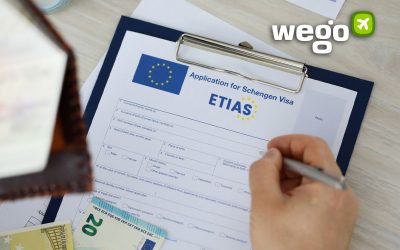
Starting in late 2026, travellers from 59 visa-exempt countries — including the UAE, UK, US, Australia, and Japan — will need ETIAS, a quick online travel authorization, before visiting Europe. It is not a visa. You apply in minutes, pay €20, and it covers 30 European countries for three years.

When Does ETIAS Launch?

As per the EU’s latest update, ETIAS is confirmed to launch in Q4 2026 (October–December). The European Commission will announce the exact start date at least six months in advance, giving travellers time to prepare.

As of May 2026, the ETIAS application portal is not yet open. You cannot apply yet — and you should be cautious of any third-party website claiming to accept ETIAS applications right now. When the system goes live, applications will only be accepted through the official EU ETIAS portal and a dedicated mobile app.

The Transitional Period

The rollout will be gradual. After launch, there will be a six-month transitional period during which travellers are encouraged to apply for ETIAS but will not be refused entry solely for not having one, provided they meet all other entry conditions.

This is followed by a six-month grace period, during which only first-time visitors (who haven’t entered since the transitional phase ended) may be allowed in without ETIAS. After both periods conclude — likely no earlier than late 2027 — ETIAS becomes strictly mandatory for all eligible travellers.

How Much Does ETIAS Cost?

The ETIAS application fee is €20 per person. This is a non-refundable fee, regardless of whether your application is approved or denied.

The fee was originally set at €7 when ETIAS was first announced, but the European Commission increased it in 2025, citing inflation since 2018, higher-than-expected operational and cybersecurity costs, and a desire to align with comparable systems like the US ESTA ($40.27) and UK ETA (£20).

Who Is Exempt From the Fee?

Two groups don’t need to pay:

  • Travellers under 18 — minors are exempt from the ETIAS fee
  • Travellers over 70 — seniors are also exempt

Who Needs an ETIAS?

You need an ETIAS if all three of the following apply to you:

  • You are not a citizen of an EU country
  • You hold a passport from one of the 59 visa-exempt countries (listed below)
  • You do not hold a residence permit or long-stay visa issued by a Schengen member state

If you currently need a Schengen visa to visit Europe, ETIAS does not apply to you — you’ll continue using the existing visa process.

Countries Whose Citizens Need ETIAS

Citizens of the following 59 countries and territories will need ETIAS to enter Europe:

Americas: Antigua and Barbuda, Argentina, Bahamas, Barbados, Brazil, Canada, Chile, Colombia, Costa Rica, Dominica, El Salvador, Grenada, Guatemala, Honduras, Mexico, Nicaragua, Panama, Paraguay, Peru, Saint Kitts and Nevis, Saint Lucia, Saint Vincent and the Grenadines, Trinidad and Tobago, United States, Uruguay, Venezuela

Europe (non-EU): Albania, Bosnia and Herzegovina, Georgia, Moldova, Montenegro, North Macedonia, Serbia, United Kingdom, Ukraine

Asia-Pacific: Australia, Brunei, Hong Kong, Japan, Kiribati, Macau, Malaysia, Marshall Islands, Micronesia, New Zealand, Palau, Samoa, Singapore, Solomon Islands, South Korea, Taiwan, Timor-Leste, Tonga, Tuvalu, Vanuatu (currently suspended)

Middle East & Africa: United Arab Emirates, Israel, Mauritius, Seychelles

Which European Countries Require ETIAS?

ETIAS will be required for entry to 30 European countries — the 29 Schengen Area members plus Cyprus. You’ll need it whether you’re arriving by air, land, or sea.

The 30 ETIAS countries: Austria, Belgium, Bulgaria, Croatia, Cyprus, Czech Republic, Denmark, Estonia, Finland, France, Germany, Greece, Hungary, Iceland, Italy, Latvia, Liechtenstein, Lithuania, Luxembourg, Malta, Netherlands, Norway, Poland, Portugal, Romania, Slovakia, Slovenia, Spain, Sweden, Switzerland

Ireland is not included. It is an EU member but does not participate in the Schengen Area or ETIAS. You cannot use an ETIAS authorization to enter Ireland.

How to Apply for ETIAS: Step by Step

The online application is designed to be simple. Most travellers will complete it in under 10 minutes. Here’s what the process looks like.

What You’ll Need

Before you start, have these ready:

  • A valid passport from an ETIAS-eligible country (must be valid for at least 3 months beyond your planned departure from Europe)
  • A working email address (your authorization will be sent here)
  • A credit or debit card to pay the €20 fee

Step 1: Visit the Official ETIAS Portal

Go to the official ETIAS website or download the dedicated ETIAS mobile app. These are the only legitimate ways to apply — there is no paper application and no in-person option.

Be cautious of unofficial websites that charge extra fees to “process” your ETIAS. The only cost is the official €20 fee paid directly through the portal.

Step 2: Fill In Your Personal Details

You’ll provide standard information including your full name, date of birth, nationality, passport number, issue and expiry dates, home address, email, and phone number.

You’ll also be asked about your education level and current occupation.

Step 3: Answer Security Questions

The application includes a set of yes/no security questions covering:

  • Whether you’ve been convicted of a criminal offence in the last 10 years
  • Whether you’ve stayed in a war or conflict zone in the last 10 years
  • Whether you’ve ever been subject to a deportation or removal order from an EU member state

Answer honestly. If you answer “yes” to any question, you’ll be asked for additional details. A past minor conviction doesn’t automatically disqualify you — each case is assessed individually.

Step 4: Pay the €20 Fee

Submit your payment via credit or debit card. Remember, travellers under 18 or over 70 are exempt.

Step 5: Receive Your Decision

Most applications are approved within minutes. Your ETIAS authorization is linked electronically to your passport — there’s nothing to print or carry.

If your application is flagged for manual review, you’ll receive a decision within 96 hours. In some cases, you may be asked to provide additional documents (you’ll have 14 days to respond), and in rare situations, processing can take up to 30 days.

ETIAS Validity: How Long Does It Last?

An approved ETIAS authorization is valid for three years — or until your passport expires, whichever comes first. During that time, you can make unlimited trips to any of the 30 ETIAS countries.

Each visit must still respect the 90-day rule: you can stay for a maximum of 90 days within any 180-day period across all Schengen countries combined.

If you get a new passport, you’ll need to apply for a new ETIAS, even if your previous authorization hasn’t expired.

What If Your ETIAS Application Is Denied?

If your application is refused, don’t panic. You’ll receive an email explaining the specific reasons for the refusal, the authority that made the decision, and how to appeal.

How to Appeal

You can formally challenge a refusal by filing an appeal with the national authority of the EU member state that denied your application. The deadline to appeal is typically 14 to 30 days from when you receive the refusal notification.

During the appeal, you may need to provide additional documentation to support your case. If your appeal is unsuccessful, you can still reapply — a previous denial does not automatically disqualify future applications. Each one is assessed independently.

ETIAS vs. EES: What’s the Difference?

Two new EU border systems are launching around the same time, which can be confusing. Here’s how they differ.

EES (Entry/Exit System)

The EES is a border registration system that records when non-EU nationals enter and exit Europe. It replaces traditional passport stamping with digital biometrics — your facial image and fingerprints are captured at the border.

EES began a phased rollout on 12 October 2025 and became fully operational on 10 April 2026. All 29 Schengen countries now apply EES at their external borders. Unlike ETIAS, you don’t apply for EES in advance — it’s handled at the border.

ETIAS (Travel Authorization)

ETIAS is a pre-travel screening system that you apply for online before your trip. It checks whether you’re eligible to enter, based on security, health, and immigration databases. ETIAS launches in Q4 2026, after EES is fully operational.

In short: EES happens at the border, ETIAS happens before your trip. Most non-EU travellers from visa-exempt countries will eventually need both. Use Wego’s flight tracker to stay on top of your travel plans as these systems roll out.

Frequently Asked Questions

Can I apply for ETIAS right now?

No. As of May 2026, the ETIAS application portal is not yet open. The system is expected to launch in Q4 2026 (October–December). Be cautious of any website claiming to accept ETIAS applications — when the system goes live, applications will only be available through the official EU ETIAS portal and its dedicated mobile app.

Will I be turned away at the border if I don’t have ETIAS when it launches?

Not immediately. After ETIAS launches, there will be a six-month transitional period during which you won’t be refused entry solely for not having an ETIAS, as long as you meet all other entry conditions. This is followed by a six-month grace period with stricter but still non-punitive enforcement. Apply as soon as the system opens to avoid any complications.

Is ETIAS the same as a visa?

No. ETIAS is a travel authorization, not a visa. It’s a quick online pre-screening for citizens of visa-exempt countries. If you currently need a Schengen visa to visit Europe, ETIAS does not apply to you — you’ll continue using the regular visa process.

Do children and seniors need to apply for ETIAS?

Yes, all travellers from eligible countries need ETIAS regardless of age. However, travellers under 18 and over 70 are exempt from the €20 application fee.

What is the difference between ETIAS and EES?

ETIAS is a pre-travel authorization you apply for online before your trip. EES (Entry/Exit System) is a border registration system that captures your biometrics when you enter and exit Europe — it’s handled at the border, not in advance. EES became fully operational on 10 April 2026. Most visa-exempt travellers will eventually need both.

Can I use ETIAS to enter Ireland or the UK?

No. Ireland does not participate in the Schengen Area or ETIAS. The UK has its own system called the Electronic Travel Authorisation (ETA). ETIAS only covers the 30 countries listed in this article — the 29 Schengen members plus Cyprus.

Tips for a Smooth ETIAS Application

Apply at least two weeks before your trip. While most approvals come within minutes, flagged applications can take up to 30 days. Don’t risk it by applying last-minute.

Only use the official portal. Scam websites that mimic the ETIAS application are already circulating. The official portal is at travel-europe.europa.eu — bookmark it.

Double-check your passport details. Typos in your passport number or name are the most common reason for processing delays. Enter everything exactly as it appears in your passport.

Keep your email accessible. All communications about your ETIAS — approval, denial, or requests for additional information — come by email. Make sure the address you provide is one you check regularly.

Remember the 90-day rule. ETIAS doesn’t extend your allowed stay. You’re still limited to 90 days within any 180-day period across all Schengen countries combined. Plan your European hotel stays accordingly.

Plan Your European Trip With Wego

While you wait for the ETIAS portal to open, there’s no reason not to start planning. Compare flights to Europe and find the best deals on Paris hotels, Barcelona hotels, and Rome hotels on Wego.

Track flight prices to popular European destinations:

Sources

  1. European Commission — ETIAS Official Portal
  2. European Commission — ETIAS Timeline Explained
  3. EU Migration and Home Affairs — ETIAS Will Cost EUR 20
  4. EU Migration and Home Affairs — Revised Timeline for EES and ETIAS
  5. EU Migration and Home Affairs — EES vs ETIAS: Main Differences
  6. EU Migration and Home Affairs — EES Fully Operational 10 April 2026
  7. European Commission — Who Should Apply for ETIAS
  8. UK Government — Electronic Travel Authorisation (ETA)
  9. iVisa — EES Live, ETIAS Launches in Late 2026 (April 2026)

Disclaimer: Wego strives to ensure all information presented in this article is accurate and up to date at the time of publication. Travel policies, prices, visa requirements, and conditions can change rapidly. We strongly recommend verifying critical details with official sources before making travel decisions. Wego does not accept liability for any inaccuracies, oversights, or changes that may occur after publication.

Wego Travel

Wego Travel

Wego Travel

Wego Travel

Wego
Save Up to US$25 on Flights with Wego Promo Codes
View Deal ›