

This article is reviewed regularly by Wego’s editorial team to ensure that the content is up to date & accurate.
Updated June 2024
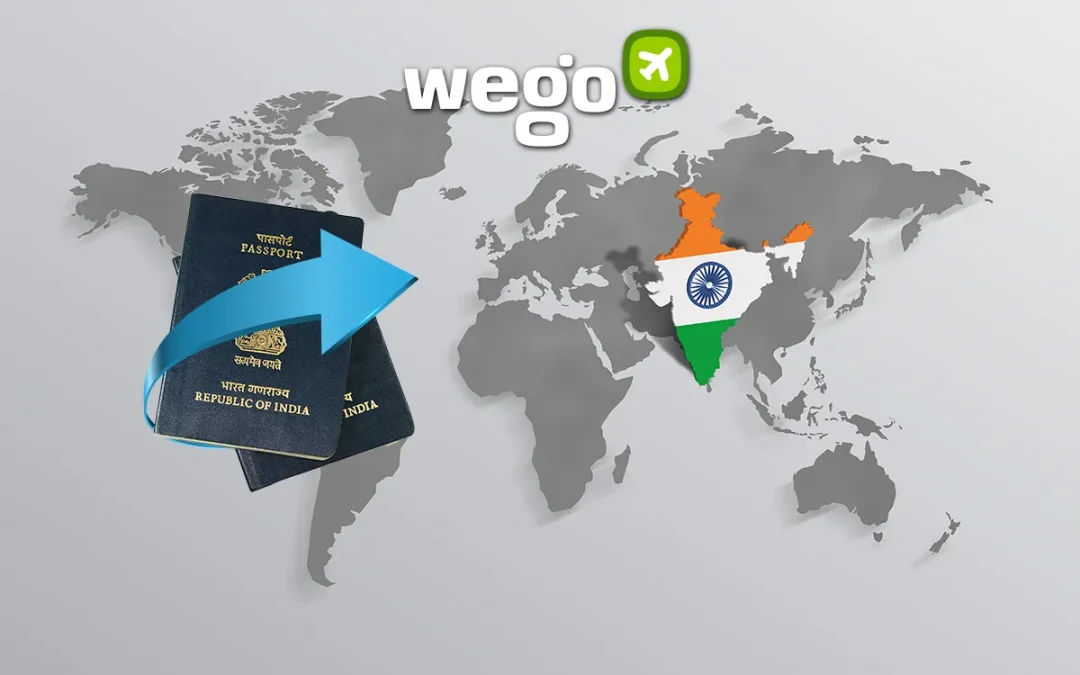
The Overseas Citizenship of India, or OCI, is an immigration status authorizing a foreign citizen of Indian origin to live and work in India for an indefinite period. The Government of India mainly launched the OCI card to meet the demands of Indians residing overseas who insisted on dual citizenship.

Keep reading as Wego breaks down everything you need to know about the Overseas Citizenship of India (OCI).
Table of Contents
Overseas Citizenship of India Latest News
Union Home Minister of India, Amit Shah, inaugurated the Fast Track Immigration — Trusted Traveller Programme (FTI-TTP) at Indira Gandhi International Airport, New Delhi on 22 June 2024. This initiative aims to streamline international travel with world-class immigration facilities via automated e-gates.
The program will initially cover Indian citizens and OCI cardholders and will expand to foreign travellers in the second phase. FTI-TTP will launch at 21 major airports, starting with Delhi, Mumbai, Chennai, Kolkata, Bengaluru, Hyderabad, Kochi, and Ahmedabad.
Overseas Citizenship of India (OCI)
The Overseas Citizenship of India or OCI is an immigration status authorising a foreign citizen of Indian origin to live and work in India for an indefinite period. The Government of India mainly launched the OCI card to meet the demands of the Indians residing overseas who insisted on dual citizenship.
However, since India did not have the option of dual citizenship, the OCI card, presented by the Citizenship (Amendment) Act of 2005, was introduced in 2005.
 Book cheap flights to India
Overseas Citizenship of India eligibility
According to the official Online OCI Services page, a foreign national will be eligible for registration as an Overseas Citizenship of India (OCI) cardholder in the following cases:
- the foreign national was a citizen of India at the time of, or at any time after 26 January 1950
- the foreign national was eligible to become a citizen of India on 26 January 1950
- the foreign national belonged to a territory that became part of India after 15 August 1947, or who is a child or a grandchild or a great-grandchild of such a citizen
- the foreign national is a minor child of the individuals mentioned above
- the foreign national is a minor child, and their parents are both citizens of India, or one of the parents is a citizen of India
- a spouse of foreign origin of a citizen of India or spouse of foreign origin of an Overseas Citizen of India Cardholder and whose marriage has been registered and subsisted for a continuous period of not less than two years immediately preceding the presentation of the application is also eligible for registration as OCI cardholder.
Please note that individuals who or either of whose parents or grandparents, or great-grandparents had been or are citizens of Pakistan, Bangladesh, or such other country as the Central Government of India may specify will NOT be eligible for registration as an Overseas Citizen of India (OCI) cardholder.
Furthermore, foreign nationals cannot apply for OCI in India while on a tourist visa, missionary visa or mountaineering visa. Moreover, the foreigner has to be an ordinary resident who is staying in a particular country or in India for a continuous period of six (6) months, to be eligible to apply for OCI registration in India.
Overseas Citizenship of India required documents
The following documents, along with the Overseas Citizenship of India application, must be uploaded to apply for the Overseas Citizenship of India card:
- proof of present citizenship
- copy of present valid passport (applicable in all cases), with a validity of a minimum of six (6) months at the time of submission of application
- copy of the certificate of registration of citizenship/naturalization for the present nationality of the applicant (applicable in all cases)
- cancelled/ Surrendered Indian passport with Surrender Certificate for those who have surrendered Indian passport in or after 2010
- evidence of address of the place of application
- copy of the Electricity Bill/ Telephone Bill in own/ parents/ grandparents/spouse’s name
- if the above is in any other relative’s name, an undertaking from the relative stating that the foreigner is residing with him/ her
- lease License in case of tenants
- in case the application is submitted in India
- copy of any long duration visa (other than on a tourist visa, missionary visa or mountaineering visa) with three (3) months validity as of the date of application, along with a Residential Permit/ Registration Certificate issued by the jurisdictional FRRO/ FRO, as the case may be (applicable in all cases where application submitted in India)
- foreign nationals holding a tourist visa, missionary visa or mountaineering visa. cannot apply for registration as an OCI cardholder in India
- copy of any long duration visa (other than on a tourist visa, missionary visa or mountaineering visa) with three (3) months validity as of the date of application, along with a Residential Permit/ Registration Certificate issued by the jurisdictional FRRO/ FRO, as the case may be (applicable in all cases where application submitted in India)
- evidence of self or parents or grandparents or great-grandparents:
- being a citizen of India at the time of, or at any time after the commencement of the Constitution, i.e. 26.01.1950; or
- being eligible to become a citizen of India at the time of commencement of the Constitution, i.e. 26.01.1950; or
- belonging to a territory that became part of India after 15th August 1947. These could be:
- copy of the Indian Passport; or
- copy of the Domicile Certificate issued by the Competent Authority; or
- copy of Nativity Certificate from the competent authority; or
- PIO/ OCI card of parents/ spouse along with documents to prove Indian
- any other proof substantiating the request. Usually, applicants are able to submit a certificate of residence or place of birth of self/ parents/ grandparents from the First Class Magistrate/ District Magistrate (DM) of the concerned place.
- evidence of relationship as parent/ grandparent/ great grandparent, if their Indian origin is claimed as the basis for registration as OCI Cardholder:
- the document of the relationship could be a “Birth Certificate” issued from a competent authority mentioning both parents’ names. In case the birth certificate is issued by a foreign authority, it is to be Apostle or endorsed by the concerned Indian Mission abroad/ concerned foreign Mission in India.
- if the parents are divorced, the court order of dissolution of marriage specifically mentions that the legal custody of the child is with the parent who is applying for the OCI Card. If the court order is in any foreign language, translation in English or Hindi by an authorized translator is to be enclosed.
- birth certificate from Birth Registrar to be supported by:
- education documents, if any and
- documents of inherited landed property, if any.
- marriage Certificate of parents (If not available, reasons for same must be provided).
- in the case of a minor child whose both parents are citizens of India or one of the parents is a citizen of India:
- copy of child’s Birth Certificate
- marriage certificate of parents (if no marriage certificate is available, reasons for same to be indicated)
- copy of Indian passport of the parents / one of the parents or copy of the Domicile Certificate or Nativity Certificate issued by the Competent Authority in respect of the parents/ one of the parents or any other proof substantiating the status of the parents/ one of the parents as being Indian citizen(s).
- if the parents are divorced, a court order of dissolution of marriage specifically mentions that the legal custody of the child is with the parent who is applying for the OCI Card. If the court order is in any foreign language, translation in English or Hindi by an authorized translator is to be enclosed.
- evidence as spouse of foreign origin of a citizen of India or spouse of foreign origin of an OCI Cardholder –
- registered Marriage Certificate; and
- in the case of the spouse of an Indian citizen:
- a copy of the Indian Passport of the spouse or
- copy of the Domicile Certificate or Nativity Certificate issued by the Competent Authority in respect of the Indian spouse or
- any other proof substantiating the status of the spouse as being an Indian citizen.
- in the case of the spouse of an OCI Cardholder:
- a copy of the present valid Passport of the spouse
- a copy of the OCI Card of the spouse, and
- copies of the documents upon which the OCI Card was issued to the spouse.
- declaration from the Indian/ OCI Cardholder spouse stating that in case of divorce/ separation/ death of a foreign spouse, it is his/ her responsibility to surrender the OCI Card to the Government of India.
- in all cases where the Marriage Certificate is to be submitted, the following guidelines will be applicable:-
- if the marriage is solemnized in India, the Marriage certificate issued by Marriage Registrar is required.
- if the marriage is solemnized in a foreign country, it should be apostilled/ certified by the concerned India Mission/ Post.
- if the Marriage Certificate is in any foreign language other than English, it should be translated into English by an authorized translator.
Please note that:
- the documents enclosed with the application should be self-attested.
- after submission of the complete application online, including documents, photograph and signature, the applicants are required to visit their jurisdictional FRRO/ Mission/ Post with the originals of the supporting documents uploaded with the online application for prior verification.
Applying for the Overseas Citizenship of India
Prerequisites
Before applying for the Overseas Citizenship of India (OCI) card, eligible foreign nationals must make sure to go through the following prerequisites:
- the applicants must carry their image and their signature image (max size 1MB).
- the height and width of the Applicant’s photograph must be equal.
- the minimum dimensions are 200 pixels (width) x 200 pixels (height).
- the maximum dimensions are 3500 pixels (width) x 3500 pixels (height).
- the height and width of the Signature Photo must have an aspect ratio of 1:3.
- the minimum dimensions are 200 pixels (width) x 67 pixels (height).
- the maximum dimensions are 3500 pixels (width) x 2500 pixels (height).
- the applicants must be ready with their supporting documents, as mentioned above, in PDF format (Max size 1000kb).
Application process
Foreign nationals eligible to register for the Overseas Citizenship of India (OCI) card can follow the steps given below to obtain the OCI card:
- click on the OCI registration link at https://ociservices.gov.in/welcome
- read the instructions properly, and click on ‘proceed’.
- make sure to read the instructions displayed on the screen carefully, and select the ‘I have read the instructions’ box.
- click on ‘Accept’.
- fill in all the required details, including the ‘Place of submission’, ‘Applicant’s information, ‘Applicant’s passport details’, ‘Applicant’s family details’, and more.
- click on ‘submit’ after verifying all the details provided
- upload your image and signature, as per requirement.
- upload your supporting documents, as required, in PDF format.
- after completing the application, make sure to take a printout of the application form, as the hard copy has to be submitted to the selected mission’s office.
Please note that:
- all fields in the application form must be filled in Block Letters.
- a person who has not attained the age of 18 years is considered a minor. In the case of a minor who cannot sign, his/her left thumb impression may be placed in the signature box. Parents should not sign on behalf of the children.
- the signature/Thumb impression should be confined to the prescribed box. In the case of minor applicants, parents should NOT sign in the box.
- the photograph to be affixed on the application should be a square shape of size not less than 51*51mm (with 80% coverage of the face). It should have a plain light colour background (not white) without the border with a front view of the person’s head and shoulders showing the full face in the middle of the photograph. It should not be stapled and not have any signature.
- photographs that do not conform to these standards will be rejected and may cause a delay in processing the applications. Please see the standards of acceptable photographs as Photo Link.
- if there are any objections while processing the applications, the same will be displayed on the Online Status Enquiry. Please follow the instructions and send the requisite documents to the Indian Mission/ Office where you have applied, quoting the File (or Acknowledgement) Number.
- after submission of the online application, a copy of the application form will be printed with an Online Registration Number.
- after receipt of the application in the concerned office, a File (or Acknowledgement) Number will be issued to the applicant by way of acknowledgement
- please contact the Mission/Office where you have applied for OCI registration after ten (10) days from the date of dispatch of documents from Delhi or any day after receipt of documents at the Mission/Office, whichever is earlier.
- please produce your passports(s) and PIO card, if applicable, in person or through an authorized person for affixing the OCI visa sticker and issuance of the registration certificate. In case of applications filled in India with FRRO, applicants should go to the FRRO office in person/through an authorized person.
- for a collection of OCI documents, the applicant is required to be present at the concerned Indian Mission or FRRO Office in person, or they can send a duly authorized person, along with his/her passport & PIO card (if any) and the original documents for which self-attested copies were attached at the time of submitting an application, for verification purposes.
- please note that Concealment of any material fact or false representation etc will lead to cancellation of registration as an Overseas Citizen of India.
Submitting the supporting documents
After submission of the complete Overseas Citizenship India card application online, including documents, photograph and signature, the applicants are required to visit their jurisdictional FRRO/ Mission/ Post with the original copy of their supporting documents uploaded with the online application for prior verification.
For applicants within India
For applicants within India, the documents can be submitted to the following Foreigners Regional Registration Officer (FRRO):
- FRRO Mumbai, FRRO Kolkata, FRRO Delhi, FRRO Amritsar, FRRO Chennai, FRRO Hyderabad, FRRO Bangalore, FRRO Lucknow, FRRO Kochi, FRRO Kozhikode, FRRO Thiruvananthapuram (Trivandrum), FRRO Ahmedabad and FRRO Goa.
Please make sure to visit the official Online OCI Services page for more details regarding the FRRO offices in India.
For applicants outside India
For applicants outside India, the documents can be submitted to the following
- Indian Mission/Post having jurisdiction over the country of which the applicant is a citizen or,
- if the applicant is not living in the country of their citizenship, the document must be submitted to the Indian Mission/Post having jurisdiction over the country of which the applicant is ordinarily resident.
Please make sure to check that all fields in the form are filled in, and all necessary enclosures are attached before submission of the form to the Indian Mission/Post abroad or FRRO in India.
Overseas Citizenship India status
The applicants can track the status of their Overseas Citizenship of India (OCI) card application through the official Online OCI Services page. They just have to provide their online Registration Number or File or Acknowledgement Number.
Please note that:
- the status enquiry feature will only be useful if your application gets acknowledged at the Indian Mission/FRRO
- generally, OCI Registration Certificate and Visa are available for delivery within 60 days from the date of acknowledgement.
Overseas Citizenship India benefits
The following are some of the benefits of Overseas Citizenship India cardholders:
- multiple-entry and multi-purpose life-long visa to visit India
- exemption from reporting to Police authorities for any length of stay in India
- parity with NRIs (Non-Resident Indians) in financial, economic and educational fields except in the acquisition of agricultural or plantation properties.